Broker economics
Retail brokers earn from spreads, commissions, margin financing and, in some markets, payment for order flow. Every one of those revenue lines scales with trading frequency — not with whether clients make money.
The conflict of interest
A broker's revenue grows when clients trade more, even as client profitability shrinks. That is why platform design rewards activity: streaks, notifications, leaderboards, one-tap orders and gamified onboarding all raise frequency. None of them raise expectancy.
When the broker is the counterparty
Many CFD and forex providers take the other side of client trades rather than routing them to an exchange. In that model, client losses are recognised directly as broker revenue — a far sharper conflict than a simple commission.
What to check
Read the provider's published retail loss rate, find out whether orders are internalised or routed, and total your annual cost as a percentage of account equity. Then compare it to the cost drag of a passive alternative.
What the long-run studies actually found
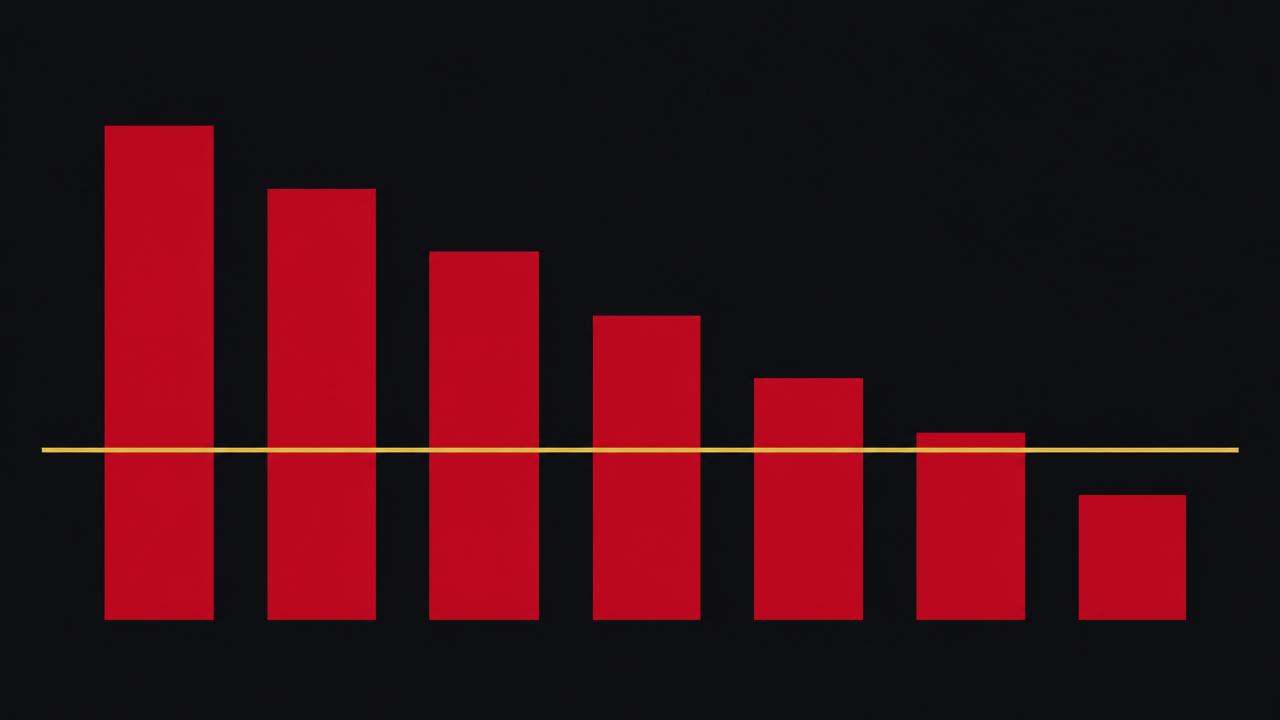
Five independent datasets, four countries and three decades point the same way: the share of retail day traders who make money after costs is small, and the share who make a living from it is smaller still. These are audited account records, not surveys or self-reported returns.
| Study or source | Sample | Headline finding |
|---|---|---|
| Barber, Lee, Liu & Odean | Taiwan, 1992-2006 | Under 1% of day traders earned reliably positive net profits; the top 500 covered their costs, everyone else funded them. |
| Chague, De-Losso & Giovannetti | Brazil, 2013-2015 (1,600 traders) | 3% were profitable and only 0.4% earned more than a bank teller. None who persisted improved with experience. |
| Barber & Odean, Trading Is Hazardous to Your Wealth | USA, 66,465 households | The most active fifth of accounts underperformed the market by about 6.5 percentage points a year. |
| ESMA and national regulators | EU/UK retail CFD accounts | 74-89% of retail CFD accounts lose money — a figure brokers are legally required to publish. |
| Jordan & Diltz | USA, 324 day traders | About 20% finished profitable over the period; losses were concentrated among the least experienced. |
Where the money actually goes
Before a trader beats the market, they must beat their own cost base. Every round trip pays a spread, usually a commission, and some slippage. At a realistic $8 per round trip, cost drag alone can exceed the entire account within a year.

| Trader profile | Round trips per year | Annual cost | Share of a $25,000 account |
|---|---|---|---|
| Casual — 5 trades a week | 260 | $2,080 | 8% |
| Active — 5 trades a day | 1,250 | $10,000 | 40% |
| Very active — 20 trades a day | 5,000 | $40,000 | 160% |
| Scalper — 50 trades a day | 12,500 | $100,000 | 400% |
Key terms, defined
- Day trading
- Opening and closing a position in the same instrument within one trading session, aiming to profit from short-term price movement.
- Spread
- The gap between the buy and sell price. It is an immediate, guaranteed loss at the moment a position opens.
- Leverage
- Borrowed exposure that multiplies both gains and losses. It shortens the time to ruin far more than it raises expected return.
- Slippage
- The difference between the expected fill price and the actual one, largest exactly when volatility makes trading look most attractive.
- Drawdown
- The fall from an account's peak to its trough. A 50% drawdown requires a 100% gain to recover.
- Expected value
- The average outcome of a strategy repeated many times. For retail day trading, it is negative after costs.
Frequently asked questions
Is payment for order flow bad for retail traders?
It funds zero-commission trading but creates an incentive to maximise order volume, and the execution quality question remains contested among regulators.
Do brokers want their clients to lose?
Commission-based brokers want volume, not losses. But providers who act as counterparty book client losses as revenue, which is a direct conflict.
Are regulated brokers safer?
Regulation improves disclosure, segregation of client funds and leverage limits. It does not change the underlying outcome statistics.
Can day trading be learned with enough practice?
The Brazilian futures study followed traders day by day and found no improvement with experience: persistence increased losses rather than skill. Unlike chess or surgery, markets give noisy, delayed feedback, so practice does not reliably build expertise.
Do courses, signals or prop-firm challenges improve the odds?
There is no published evidence that paid education changes outcomes. Course fees, subscription costs and challenge fees are additional guaranteed costs added on top of an already negative expected value.
What is a realistic annual return for a retail day trader?
For the large majority it is negative after costs and taxes. A diversified index fund returned roughly 7-10% a year on average over long periods, with no screen time and far lower cost.
Read the whole argument
The business models behind retail trading are dissected chapter by chapter in Day Trading Kills.